Customizable Reports in Payment Gateway Software: Turning Transactions into Business Intelligence
Money coming in is good.
Understanding that money is what builds a serious business.
Most merchants integrate a payment gateway thinking the job ends once payments start succeeding. In reality, payments are only half the story. The other half is data, and that data lives inside payment reports.
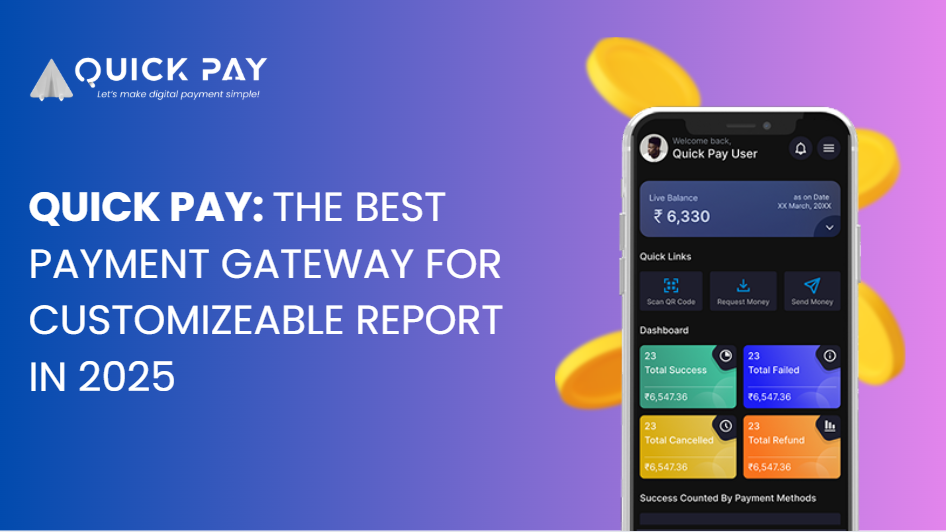
This is where customizable reports in payment gateway software become critical. Not as a "nice-to-have" feature, but as a core operational tool that directly affects finance, operations, decision-making, and compliance.
Why Standard Payment Reports Are Not Enough
Most basic payment gateways provide fixed-format reports. A list of transactions, dates, amounts, and statuses. That may look acceptable on day one, but it breaks down the moment transaction volume increases.
Every business is different.
An ecommerce brand tracks refunds differently than a school.
A SaaS company thinks in subscriptions, not one-time payments.
A utility provider cares about settlement cycles more than checkout UX.
Static reports force businesses to adjust their processes around the software. Customizable reports do the opposite. They adapt to how the business actually operates.
What Are Customizable Reports in a Payment Gateway?
Customizable reports allow merchants to filter, structure, and analyze payment data based on their own requirements rather than predefined templates.
Instead of downloading the same generic CSV every time, businesses can generate reports based on parameters like payment mode, transaction status, settlement date, customer identifiers, order IDs, or time periods.
The goal is simple.
Turn raw transaction data into usable financial insight.
How Customizable Reports Help Finance and Accounting Teams
Finance teams do not think in "successful" or "failed" transactions. They think in reconciliation, settlements, pending amounts, and revenue recognition.
With customizable reporting, finance teams can:
-
Track settlements bank-wise and date-wise
-
Separate successful, reversed, and refunded transactions
-
Match gateway data with internal accounting systems
-
Identify discrepancies before they become problems
Without this flexibility, reconciliation becomes manual, slow, and error-prone. That is not a technical inconvenience. It is a financial risk.
Operational Clarity for Growing Businesses
As businesses scale across cities and customer segments, payment complexity increases. Different payment modes behave differently. UPI has different success patterns than cards. Refund timelines vary. Settlement cycles differ.
Customizable reports allow operations teams to see patterns clearly. They can identify where failures are happening, which payment methods perform better, and how customer behavior changes over time.
This visibility directly impacts decisions like:
-
Which payment modes to prioritize
-
Where to optimize checkout flows
-
How to reduce refund and failure rates
Data stops being noise and starts guiding action.
Custom Reports and Compliance Readiness
In India, payment data is not just internal information. It is often required for audits, compliance checks, and regulatory reporting.
Customizable reports help businesses:
-
Produce audit-ready transaction logs
-
Respond quickly to bank or regulatory queries
-
Maintain clean financial records
-
Reduce dependency on manual data extraction
When compliance questions arise, having structured access to payment data saves time, money, and stress.
Real-World Example of Customizable Reporting
Consider an education platform collecting fees online. They need reports by student ID, class, payment cycle, and settlement status. A generic transaction list is useless for this use case.
With customizable reports, they can generate exactly what their finance and admin teams need, without exporting data into multiple tools and fixing it manually every month.
This is the difference between software that merely processes payments and software that supports business operations.
Why Customizable Reports Reflect Payment Gateway Maturity
Anyone can process payments.
Only mature payment gateways help businesses understand them.
Customizable reporting shows that a payment gateway understands:
-
Merchant workflows
-
Financial operations
-
Scaling challenges
-
Compliance realities
Gateways like Quickpay focus on building reporting systems that grow with the merchant, not systems that break under scale.
Final Thoughts
Payments generate data every second.
Ignoring that data is leaving clarity, efficiency, and growth on the table.
Customizable reports in payment gateway software are not about aesthetics or dashboards. They are about control, accuracy, and confidence in financial decision-making.
Businesses that take reporting seriously run cleaner operations and scale faster. The rest keep guessing.